Montessori vs Daycare
📚 Understanding Your Options
Montessori vs. Daycare:
Which Is Right for Your Child?
Both provide safe, caring environments. But they work in fundamentally different ways — and those differences can shape your child's development for years to come.
📖 5 min read • 📊 Research-backed
An Honest Perspective
Both Options Have Value
Let's be clear: quality daycare centers do important work. They provide working families with reliable, safe childcare — and that matters enormously.
The question isn't whether daycare is "good" or "bad." The question is:
What do you want your child's early years to look like?
📊 Evidence-Based Insights
What the Research Actually Says
A 2023 systematic review analyzed 32 rigorous studies with over 132,000 data points across 8 countries:
by 6th grade
(focus & self-control)
in social conflicts
development
"Montessori education has meaningful and positive benefits compared to traditional education. Montessori students were, on average, a full school year ahead by sixth grade."
— Psychology Today, analyzing Campbell Collaboration data (2023)
Sources: Campbell Systematic Reviews (2023) · Lillard & Else-Quest, Science (2006) · University of Virginia / PNAS (2025)
Montessori vs. Daycare: Side-by-Side
| 🌿 Montessori | 🏠 Traditional Daycare | |
|---|---|---|
| Primary Focus | Education + Care | Care + Supervision |
| Learning Style | Child-led, self-paced | Teacher-directed, group activities |
| Classroom Setup | Natural materials, ordered | Bright colors, plastic toys |
| Age Grouping | Mixed-age (2-3 year spans) | Same-age groups |
| Daily Schedule | Long work blocks (2-3 hrs) | Shorter, rotating activities |
| Teacher Role | Guide / Observer | Instructor / Supervisor |
| Teacher Training | Specialized certification | Varies widely |
| Assessment | Observation-based, no grades | Varies; may include reports |
| Curriculum | Structured across 5 areas | Varies by center |
Deep Dive
5 Key Differences That Matter
How Children Learn: Self-Directed vs. Teacher-Directed
IN MONTESSORI
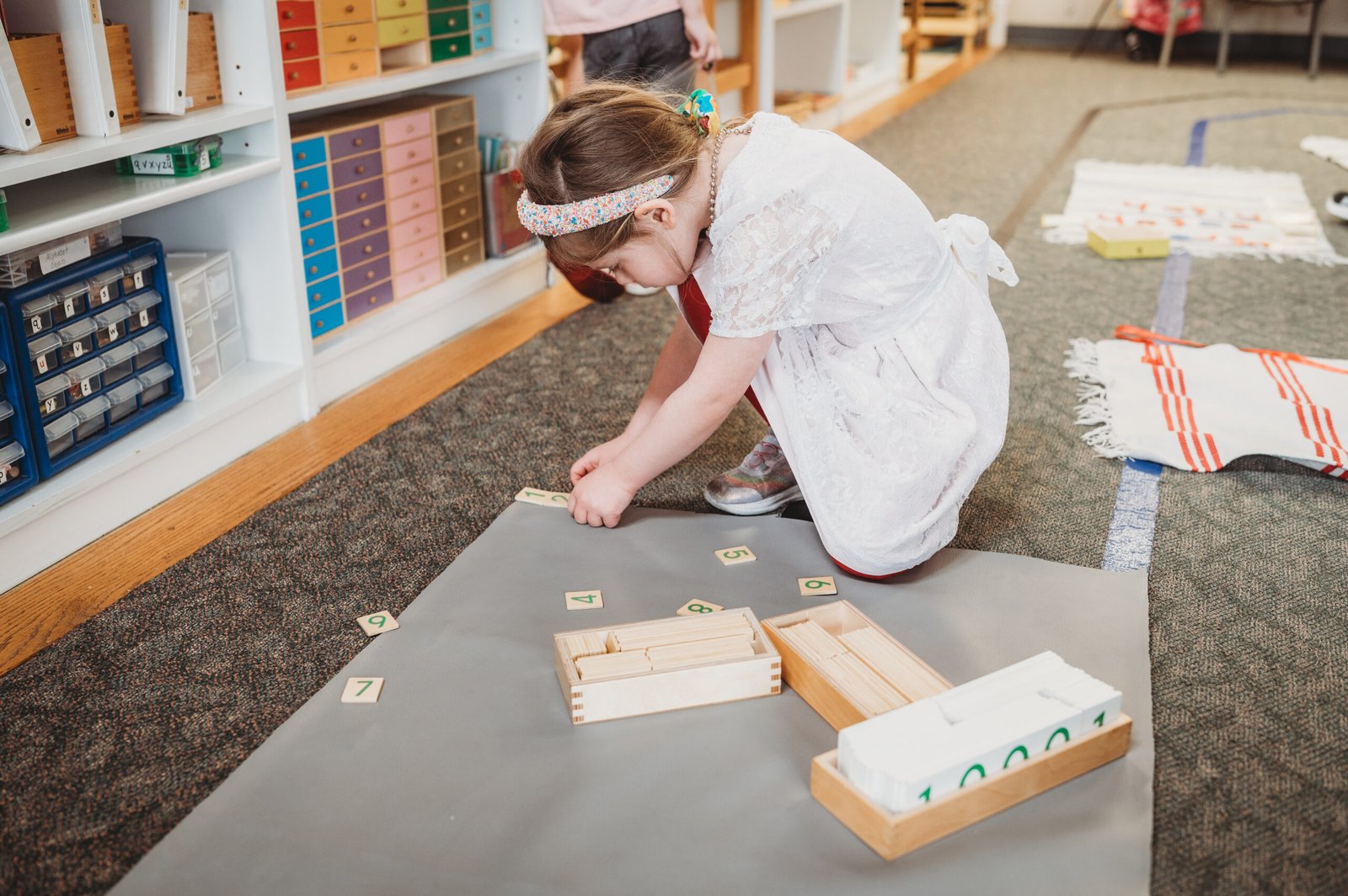
Children choose their own work from carefully prepared options. A child might spend 45 minutes deeply focused on a puzzle while another practices pouring water.

IN DAYCARE
Teachers plan activities for the whole group. Story time at 10:00, art at 10:30, snack at 11:00. Children follow the schedule together.
💡 Why It Matters
Self-directed learning builds executive function — the ability to focus, plan, and regulate emotions. Research shows these skills predict academic success even better than IQ.
The Environment: Intentional Design vs. General Play Space
IN MONTESSORI
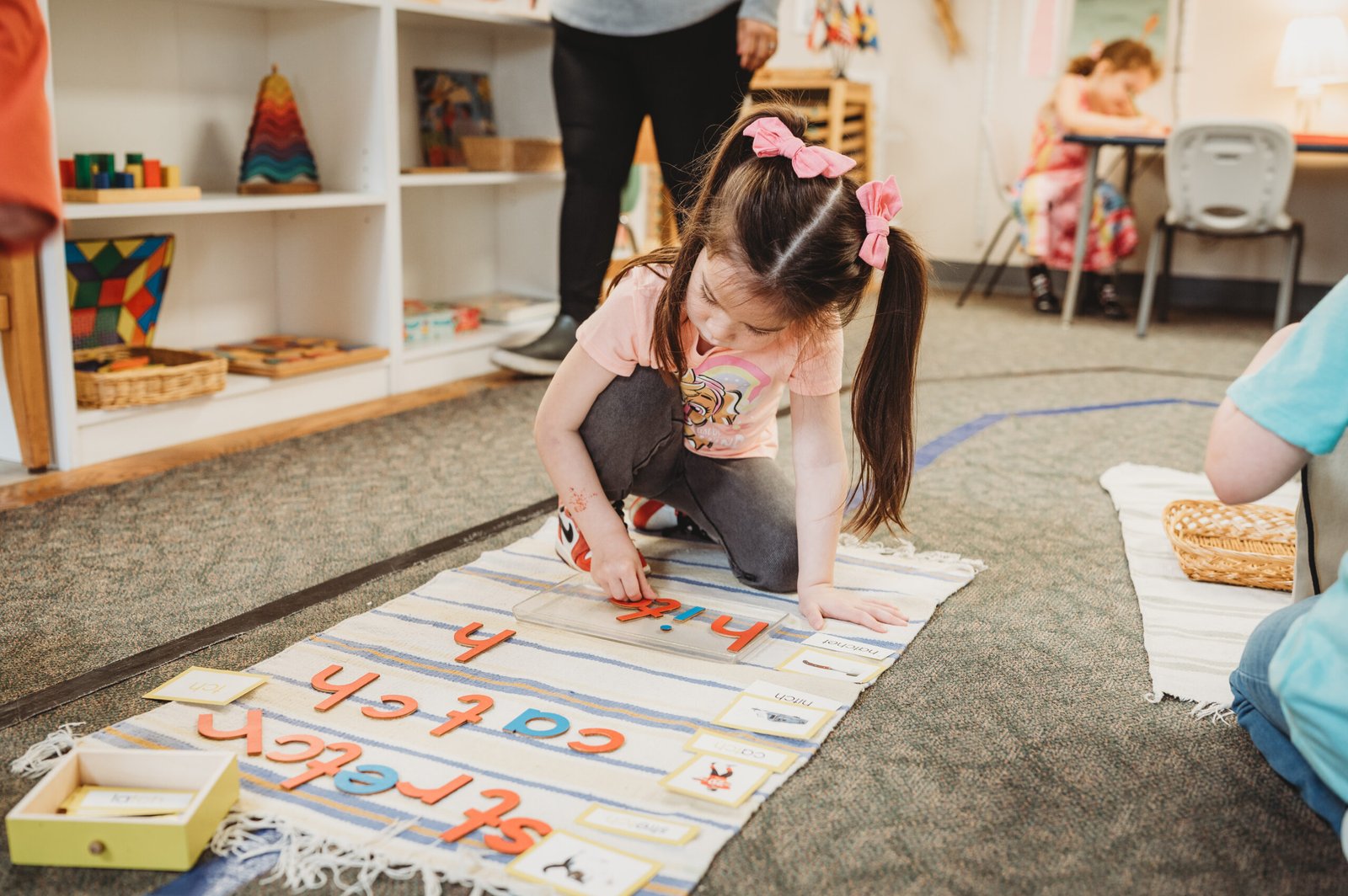
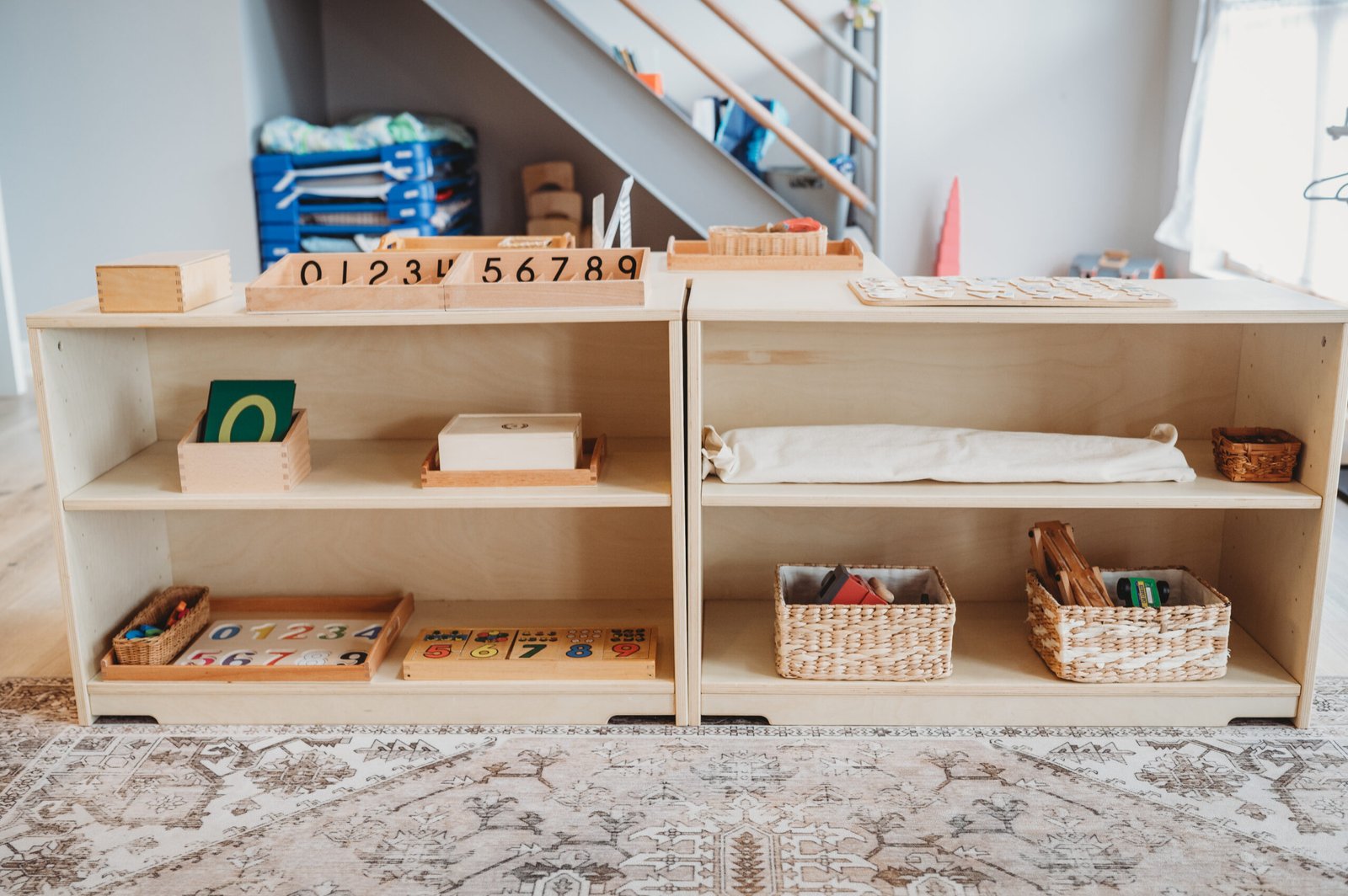
Natural wood materials, soft lighting, plants, everything at child height. It feels calm, almost home-like. Every material has a specific learning purpose.
IN DAYCARE
Often features bright colors, plastic toys, and cartoon characters. Designed to be stimulating and fun, but can be overwhelming for some children.
💡 Why It Matters
Montessori environments reduce overstimulation and promote concentration. Children sensitive to noise or visual clutter often thrive in calmer spaces.
Mixed Ages vs. Same-Age Groups
IN MONTESSORI
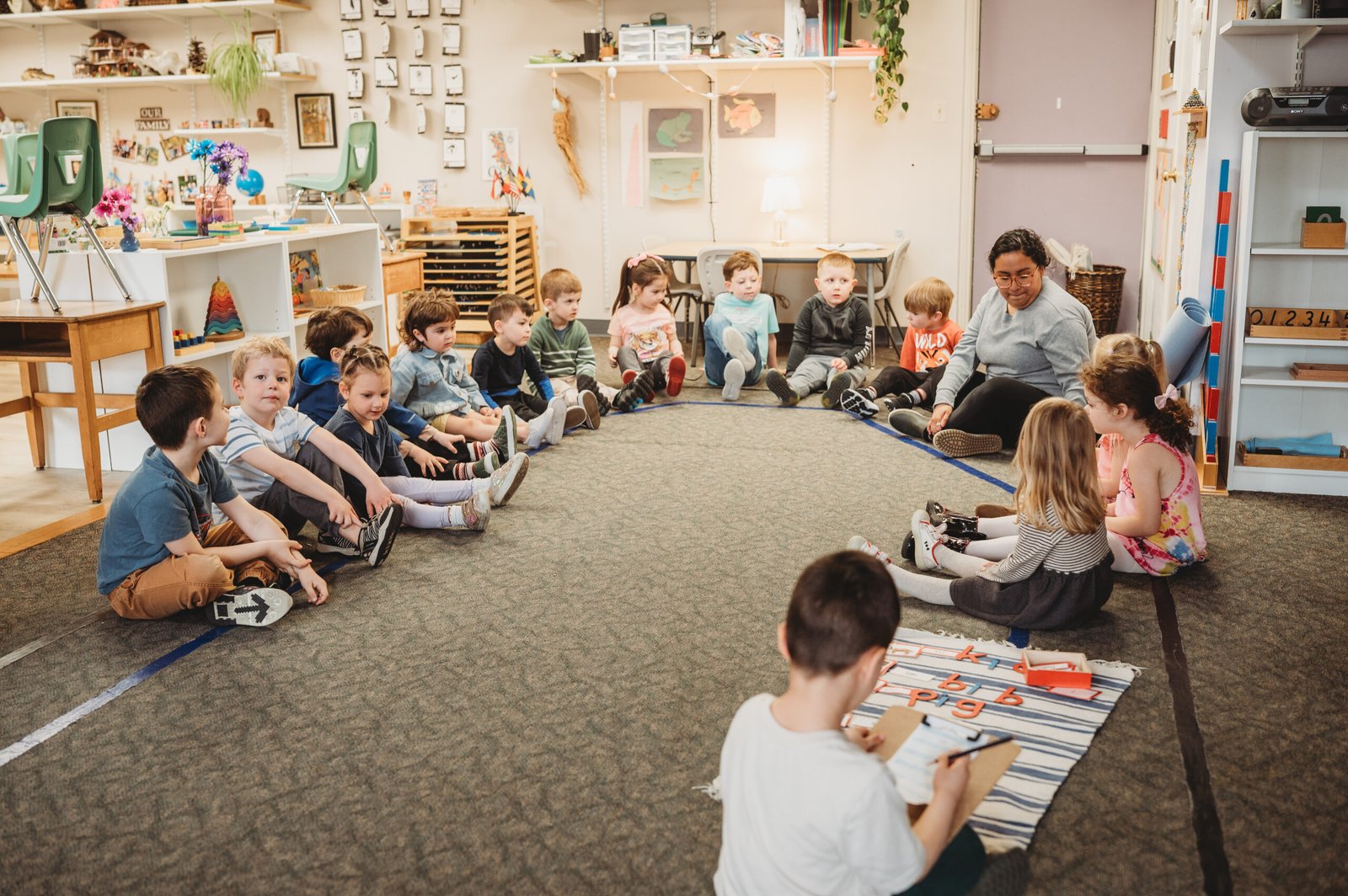
Intentionally mixes ages (typically 3-year spans). Younger children learn by watching older peers; older children reinforce knowledge by helping younger ones.
IN DAYCARE
Groups children by age: 2-year-olds together, 3-year-olds together. Makes scheduling simpler but limits peer modeling.
💡 Why It Matters
Mixed-age settings foster leadership, empathy, and social skills. Children learn they can be both learner AND teacher — a powerful mindset for life.

Teacher Training and Consistency
IN MONTESSORI
Teachers complete 1-2 years of specialized training through accredited organizations (AMS, AMI). Children often stay with the same teacher for 2-3 years.
IN DAYCARE
Requirements vary by state and center. Some have excellent staff; others meet only minimum licensing requirements. Higher turnover is common.
💡 Why It Matters
Long-term relationships with teachers build deep trust and allow teachers to truly understand each child's development. Meet our experienced team →
Long-Term Outcomes
The research is clear: children in high-fidelity Montessori programs show stronger outcomes in reading, math, executive function, and social problem-solving.
Key Finding (2025): A study in PNAS found that Montessori advantages don't fade over time — unlike many traditional preschool programs where early gains disappear by kindergarten.
💡 Why It Matters
Early education is an investment. The skills children develop — focus, self-regulation, love of learning — shape their entire educational journey.
Which Is Right for Your Child?
Every child is different. Here are some honest considerations:
🌿 Montessori may be great if your child...
- Is curious and loves to explore
- Benefits from calm, orderly environments
- Shows interest in "real" tasks (cooking, cleaning)
- Is independent or wants to be
- Needs time to focus deeply
- Is sensitive to noise or overstimulation
- Thrives with consistent routines
🏠 Daycare may work well if your family...
- Primarily needs reliable care during work
- Prefers a structured, predictable schedule
- Has a child who loves high-energy groups
- Is looking for the most affordable option
- Needs extended hours (early/late)
- Plans to move frequently
💭 Still unsure? The best way to decide is to visit both types of environments and observe how children engage. Trust your instincts.
What to Look for When Visiting
Whether you tour a Montessori school or daycare, use this checklist:
Watch the Children
- Are they engaged or wandering?
- Do they seem calm or chaotic?
- Are they interacting positively?
- Do they look genuinely happy?
Notice the Environment
- Is it clean and organized?
- What's the noise level?
- Are materials child-accessible?
- Does it feel welcoming?
Ask These Questions
- What training do teachers have?
- What's the turnover rate?
- How do you handle conflicts?
- How do you communicate?
Red Flags (Any Setting)
- Teachers seem stressed or dismissive
- Children seem unhappy
- Reluctance to let you observe
- Vague answers about training
Our Approach
How W Montessori Academy Compares
At W Montessori Academy in Elmhurst, we've practiced authentic Montessori education for over 20 years. Here's what that means:
Authentic Materials
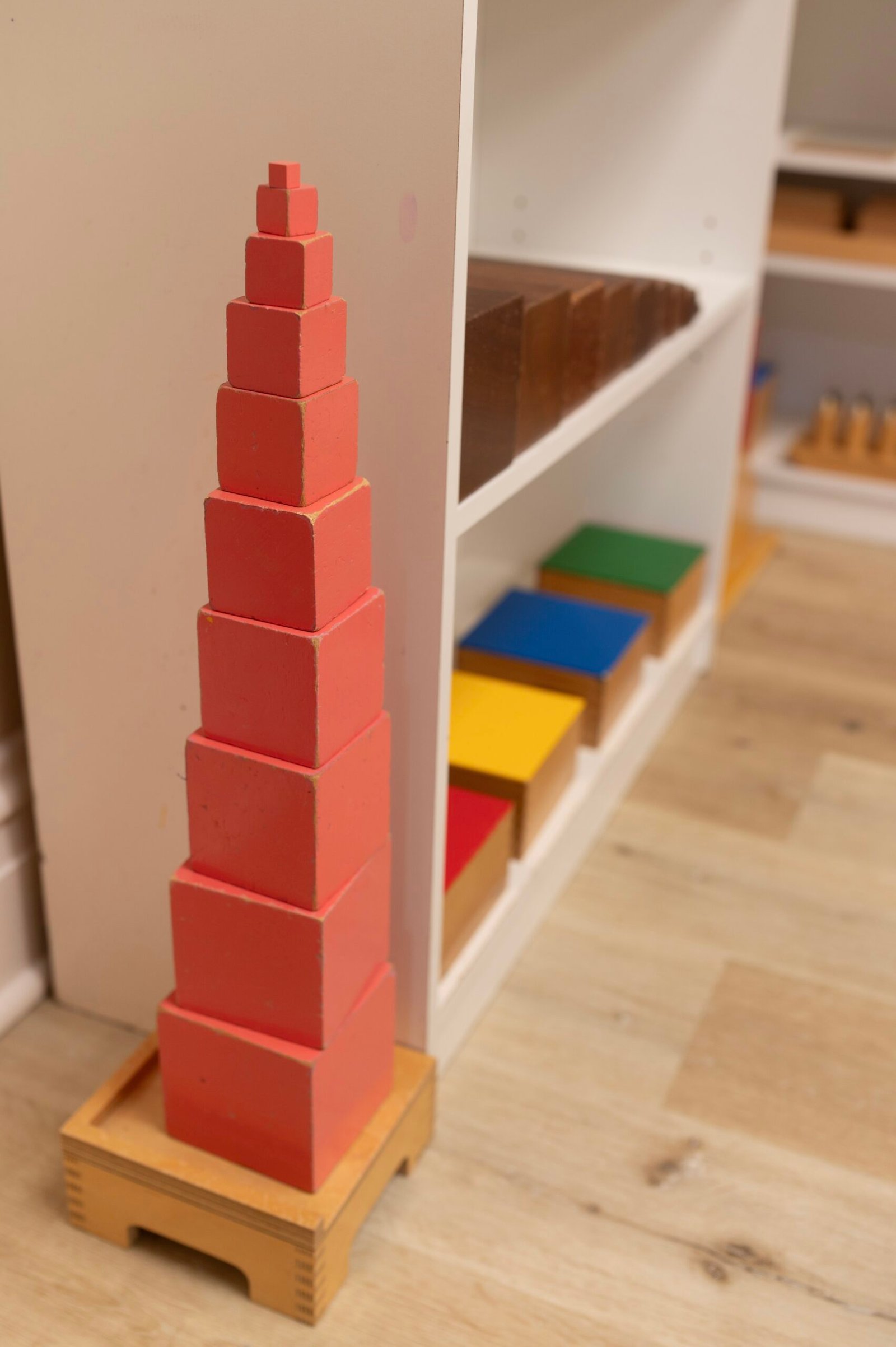
Genuine Montessori materials — not toys — for each developmental stage.
Bilingual Enrichment
Daily Spanish & Polish immersion builds cognitive flexibility.
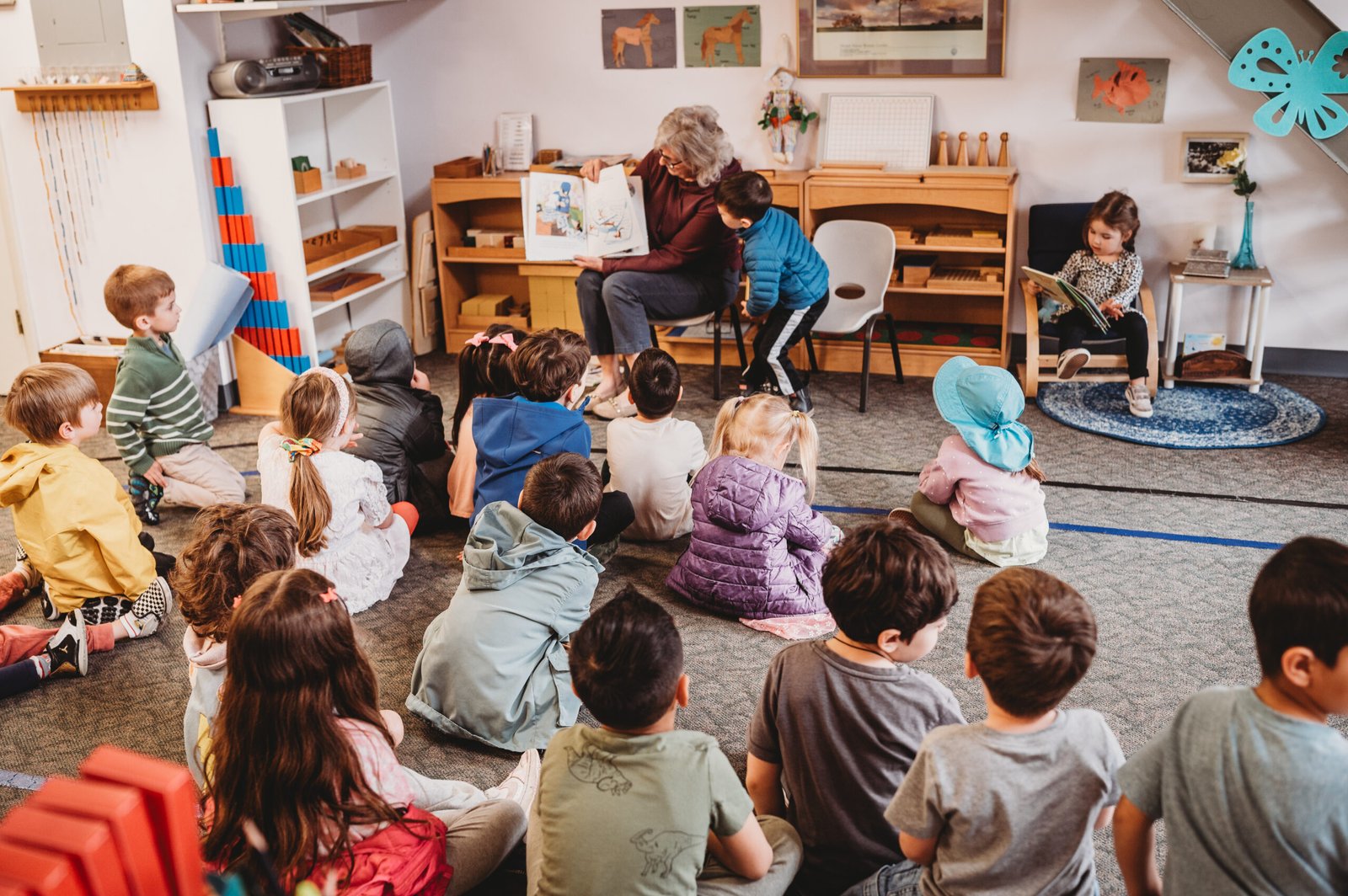
"We toured several preschools and daycares before finding W Montessori. The difference was immediately clear — the calm environment, the engaged children, the thoughtful teachers. Our daughter has thrived here."
🏡 Looking for Montessori Academy in Elmhurst?
If you're searching for daycare in Elmhurst, IL, consider an option that offers safe, nurturing care plus the lasting benefits of Montessori education. We serve families from Elmhurst and surrounding communities.
Frequently Asked Questions
Costs vary by location. Montessori is often comparable to quality daycare — and recent research (PNAS, 2025) shows it can be more cost-effective due to efficient classroom structures. Consider the long-term value: stronger academics, executive function, and social-emotional skills.
Children can begin as young as 2 years old. Research shows the strongest effects for ages 3-6, but benefits occur at all ages. The earlier they start, the more time to develop independence and focus.
Yes — and often they excel. Montessori children transition well because they've developed strong self-regulation and love of learning. Studies show they perform at or above grade level in traditional schools.
Often, yes! Montessori allows children to move freely — they're not expected to sit still. Active children thrive because they choose hands-on work and engage their bodies while learning. Many "high-energy" kids find surprising focus in Montessori.
Absolutely. Montessori environments are calmer and quieter. Shy children flourish because they're not forced into group activities before ready. They can work independently, observe peers, and build confidence gradually.
Look for: certified teachers (AMS, AMI, MMTTC), mixed-age classrooms, 2-3 hour work cycles, authentic materials, and a calm environment. Schools affiliated with the American Montessori Society meet quality standards.
Yes! W Montessori Academy in Elmhurst offers Montessori programs for ages 2-6, with half-day and full-day options. We provide care families need, plus authentic Montessori education. Learn more →
👀
The Best Way to Decide?
See It for Yourself.
Reading can only tell you so much. Visit our classroom, observe children at work, and feel the difference. Tours take about 30 minutes.
W Montessori Academy · 136 W Vallette St, Ste 8, Elmhurst, IL 60126